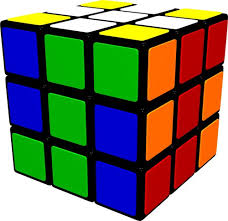
Does anyone recognize this 2x2x2 method?

stevish

Member
Joined
May 4, 2023
Messages
24
Location
Florida
My easily discouraged 8-year-old son is trying to get into speed cubing with a 2x2x2 cube, but can't get to the point of solving it with no instructions in front of him. He got fairly decent at using the instructions that came with the cube, but couldn't memorize any of those algorithms, let alone all the cases. I wanted to find him some instructions with the fewest possible (and easiest to memorize) algorithms while still being able to solve it in less than 2 minutes. Basically, an effective method for solving the 2x2x2 cube that is also very easy to memorize.

I couldn't find anything to my liking online, so I combined a lot of options and came up with my own, and later wound up modifying the single PLL algorithm to simplify things a little. I ended up with something that seems pretty good to my eye, so I assume it has already been done before, and I wondered what it's called (if it has a name). Here is the method (by the way, it does PLL before OLL, which is backward from most speed cubing solves, I know):

Algorithm 1: R' D' R D

Algorithm 2: R U' L' U R' U' L

  1. The first step is solving the white layer. It consists of choosing a side to be white and turning the cube so that it's facing up. Then you rotate the bottom layer to bring pieces underneath where they belong and use algorithm 1 until it's in place and the white side is up. You also use algorithm 1 to move a white piece out of the top layer if it's where it doesn't belong.
  2. Once the white side is solved, flip the cube so white is down. Rotate the top of the cube until exactly 2 top corners are where they belong, with or without the yellow sticker facing up (if all 4 are where they belong, skip this step). If the 2 correct corners are next to each other, put them on the right side and do algorithm 2. If the 2 correct corners are across from each other, place one in the front right and the other in the back left and do algorithm 2 twice.
  3. Now we need to get the yellow stickers to all face up. Hold the cube so one of the pieces that needs to be rotated is in the front right position. Do Algorithm 1 until the yellow sticker faces up. Turn only the top layer until another piece that need rotation is in the front right and do algorithm 1 until it's right. Repeat until all yellow is facing up, and then turn the top until the cube is solved!
So, there are only 2 algorithms to learn, a 4-turn and a 7-turn. And there are about 4 different situations to apply them to (#1 is used to move white corners up or rotate yellow corners, and #2 is used in the 2 different cases for step 2).

So here is my actual question:

Does anyone recognize this method and know whether it has a name? Or is there one that's similar and just as simple that has a name?

As a bonus question, is there another method out there that is simpler than this?
 
Does anyone recognize this method and know whether it has a name? Or is there one that's similar and just as simple that has a name?
This is the common technique taught for beginners for solving 3x3x3 corners in the last layer. It doesn't have a specific name as far as I know.
As a bonus question, is there another method out there that is simpler than this?
This is probably among the easiest methods to learn. It is possible to solve 2x2x2 with no algorithms, but they are probably not as easy. (There may be some debate regarding what an "algorithm" constitutes, for instance I would argue that using R' D' R D for corners is not an algorithm as they are intuitive commutators with cancellations)
 
Don't know a name for it. It seems to be one of many cases of the LBL method family. I use a similar method with my students, except that I do first layer on the bottom. In my case, my main go is to use algorithms that can also be used in 3x3x3, 3x3x3 "super-cube" (i.e, with center orientation) and Megaminx, so that is less new things to learn when changing puzzles
 
Thanks, everyone! I was just googling the wrong terms. So, I have only a slight variation of the beginner's method. I did end up shortening the PLL algorithm and setting up the instructions so you know ahead of time how many times you'll need to do it, and don't need to keep checking the top permutation to see if it's solved yet (for instance if you choose the wrong 1 corner, to where the other 3 need to move clockwise, but you move them counter-clockwise).

Discomantis, that progression of videos is perfect! I'll share those with him so he knows there's someplace to go after getting good at what he's doing now.

​

 
My easily discouraged 8-year-old son is trying to get into speed cubing with a 2x2x2 cube, but can't get to the point of solving it with no instructions in front of him. He got fairly decent at using the instructions that came with the cube, but couldn't memorize any of those algorithms, let alone all the cases. I wanted to find him some instructions with the fewest possible (and easiest to memorize) algorithms while still being able to solve it in less than 2 minutes. Basically, an effective method for solving the 2x2x2 cube that is also very easy to memorize.

I couldn't find anything to my liking online, so I combined a lot of options and came up with my own, and later wound up modifying the single PLL algorithm to simplify things a little. I ended up with something that seems pretty good to my eye, so I assume it has already been done before, and I wondered what it's called (if it has a name). Here is the method (by the way, it does PLL before OLL, which is backward from most speed cubing solves, I know):

Algorithm 1: R' D' R D

Algorithm 2: R U' L' U R' U' L

  1. The first step is solving the white layer. It consists of choosing a side to be white and turning the cube so that it's facing up. Then you rotate the bottom layer to bring pieces underneath where they belong and use algorithm 1 until it's in place and the white side is up. You also use algorithm 1 to move a white piece out of the top layer if it's where it doesn't belong.
  2. Once the white side is solved, flip the cube so white is down. Rotate the top of the cube until exactly 2 top corners are where they belong, with or without the yellow sticker facing up (if all 4 are where they belong, skip this step). If the 2 correct corners are next to each other, put them on the right side and do algorithm 2. If the 2 correct corners are across from each other, place one in the front right and the other in the back left and do algorithm 2 twice.
  3. Now we need to get the yellow stickers to all face up. Hold the cube so one of the pieces that needs to be rotated is in the front right position. Do Algorithm 1 until the yellow sticker faces up. Turn only the top layer until another piece that need rotation is in the front right and do algorithm 1 until it's right. Repeat until all yellow is facing up, and then turn the top until the cube is solved!
So, there are only 2 algorithms to learn, a 4-turn and a 7-turn. And there are about 4 different situations to apply them to (#1 is used to move white corners up or rotate yellow corners, and #2 is used in the 2 different cases for step 2).

So here is my actual question:

Does anyone recognize this method and know whether it has a name? Or is there one that's similar and just as simple that has a name?

As a bonus question, is there another method out there that is simpler than this?
I think a better method is to make a side without caring for matching colors, then you use sune 2 times max to orient the corners, then you use adj-adj PBL 2 times max to solve any pbl

Edit: sorry, you must use sune 3 times max or then one sune and one sune or antisune

I can make a tutorial if you want, I made one in notion but it is in portuguese

just 2 algs and a stepping stone into ortega, a method than can be used to get fast times and not as hard to learn as cll.
 
Last edited by a moderator:
I think a better method is to make a side without caring for matching colors, then you use sune 2 times max to orient the corners, then you use adj-adj PBL 2 times max to solve any pbl

I can make a tutorial if you want, I made one in notion but it is in portuguese

just 2 algs and a stepping stone into ortega, a method than can be used to get fast times and not as hard to learn as cll.
Ok. If you could make (or point me to) a tutorial on that, I'd love to take a look and offer it to my son. I didn't really understand most of how you described the method, I've only been cubing for about 5 months and haven't looked at anything besides F2L and 2-look OLL and PLL. So a lot of abbreviations and names are unfamiliar to me.
 
Ok. If you could make (or point me to) a tutorial on that, I'd love to take a look and offer it to my son. I didn't really understand most of how you described the method, I've only been cubing for about 5 months and haven't looked at anything besides F2L and 2-look OLL and PLL. So a lot of abbreviations and names are unfamiliar to me.
I gotchu


if you have any questions, just ask
 
I think this one could be the easiest method, but it's very close to the one Filipe Teixeira suggested


Besides of inserting and edge flipping it's only one very easy alg (optional two with an even easier second alg)
And there is no layer building, just a side of the best color.
 
Back
Top