I used the Polya-Burnside lemma to calculate the total number of cases for the last 10 edges (U-layer edges and FR edges), using conjugation by U-layer turns and reflections to reduce the cases. This gave 454096 cases. Without reflections, the number of cases increases to 907424. I also wrote a C++ program to do a brute force verification of these numbers. With my C++ program, I also computed 230612 cases when using inverses as well.
I note that if the idea is to generate optimal algs for each case, then conjugation by U-layer turns should not be used to reduce the cases. As I noted in an earlier post, it is possible to use conjugation by cube rotations (and not just y-axis rotations) to reduce the number of cases. I calculated the resulting number of cases for each set of n-cycles using a C++ program.
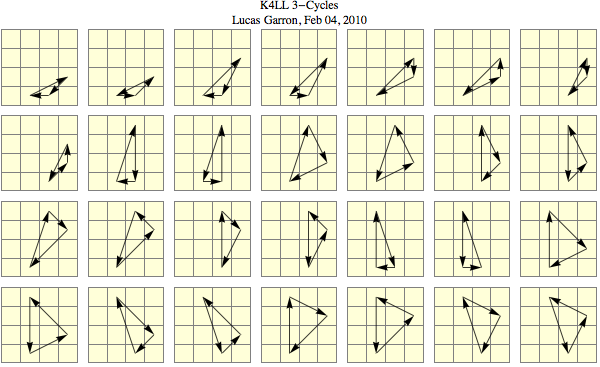
I am not completely sure of these results, but the values I got for using cube rotations only is (for n=2,3,...,10):
{ 14, 108, 818, 4800, 22500, 82080, 223036, 403200, 362880 }
For considering reflections as equivalent, the numbers I get reduce to:
{ 9, 56, 416, 2400, 11266, 41040, 111542, 201600, 181440 }
For considering reflections and inverses as equivalent, I get:
{ 9, 32, 220, 1224, 5681, 20616, 55879, 100992, 90816 }
Doing the same for only the edge pair preserving n-cycles, I get (for n=2,4,6,8,10):
considering cube rotations only:
{ 1, 5, 44, 204, 384 }
considering cube rotations and reflections:
{ 1, 4, 22, 102, 192 }
considering cube rotations, reflections, and inverses:
{ 1, 3, 15, 54, 104 }