NebraskanSpeedsolver
Member
Is anybody here able to help me learn Psuedo Slotting? I watched JPerm's tutorial but it just seems a little confusing

Follow along with the video below to see how to install our site as a web app on your home screen.
Note: This feature may not be available in some browsers.

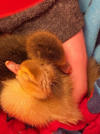
Those are adorable!im learning it my self... but.......
iKR we found them so close to our house with no mom for about 100 yards.. which we know that the moms dont do that. so we took them homeThose are adorable!


we keep them in a box with a lampWow! Well, hopefully they don't leave little traces of themselves laying around
i think its time for there daily run!or hold them

“Go eat some sand”...and the duck walked up to the lemonade stand, and he said to the man running the stand...
That’s my best guess“Go eat some sand”

It's "HEY!! ...( bum bum bum) got any grapes?"That’s my best guess
Oh yes, I forgot. Grapes are good. Good grapes.It's "HEY!! ...( bum bum bum) got any grapes?"

Before using psuedoslotting you need to be comfortable with keyhole. Basically the way it works is that you have one slot with the edge not solved and another with the corner not solved. You do a D move to move the unsolved corner to where the unsolved edge is or a wide U move to bring the edge to the corner spot ( you decide this mostly based on edge orientation), which creates a completely unsolved F2L slot. From there you just pair the corner and edge together and solve like normal F2L. I'd suggest doing practice with something like D < RU gen turning to create a random F2L case, then D'. Then look at it until you know how to solve the pair.Is anybody here able to help me learn Psuedo Slotting? I watched JPerm's tutorial but it just seems a little confusing
The one serious post on hereBefore using psuedoslotting you need to be comfortable with keyhole. Basically the way it works is that you have one slot with the edge not solved and another with the corner not solved. You do a D move to move the unsolved corner to where the unsolved edge is or a wide U move to bring the edge to the corner spot ( you decide this mostly based on edge orientation), which creates a completely unsolved F2L slot. From there you just pair the corner and edge together and solve like normal F2L. I'd suggest doing practice with something like D < RU gen turning to create a random F2L case, then D'. Then look at it until you know how to solve the pair.


agree with other posters that Keyhole is, well, yknow ... and a good precursor to getting a grip on pseudoslotting...It's "HEY!! ...( bum bum bum) got any grapes?"