aquila_zyy
Member
So, I decided to share my take on PLL recognition. I know there are already plenty of very good and detailed guides on the site and YouTube, but I find most of them simply being lists of cases and/or patterns to memorize, which I think are quite intimidating for beginners who are at this level.
Instead of just organizing another library of cases and patterns, I will try to give a full step-by-step guide to my method of recognizing PLL cases, which is made up of manageable sub-steps to distinguish between similar cases. It also has a simpler two-look version, where one first locate the headlight by looking at only two sides (or check that there isn't one).
All images are generated with Puzzle-Gen by tdecker91. I may make a portable pdf later if there is a demand for it.
====================================
Case 0: Easy cases we shall not consider later
We will skip some very easy cases if they appear with their most prominent features already visible, such as F-perm with its long bar visible, or A-perms, V-perms, and Y-perms with their two bars visible. I will also assume you can recognize H-perm, and Z-perm and can distinguish them from the two U-perms from any side.
There are only two set of cases that are worth mentioning for once. They are: N-perms v.s. J-perms, and Ua v.s. Ub-perm.
N-perms v.s. J-perms
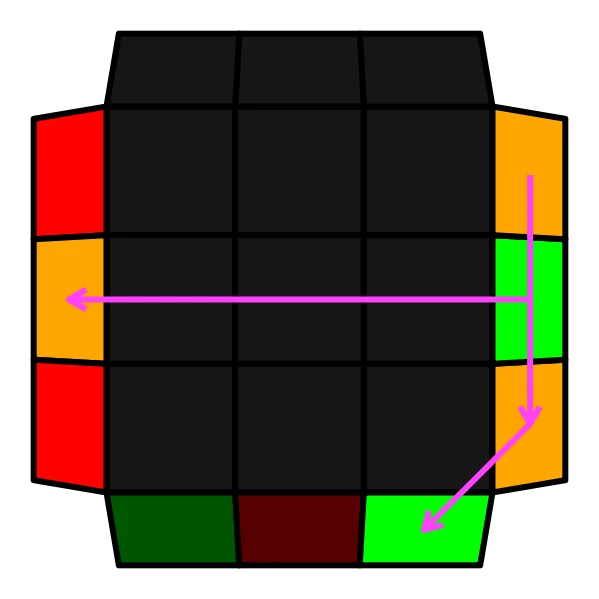
These cases may look similar when you can't see the long bar on J-perms. One way to tell them apart is by looking at the color of the "heads" of the "match sticks" relative to their body. On both sides of the two N-perms, the heads have color opposite to their body, but on J-perms, only one side appears with opposite colored match stick.
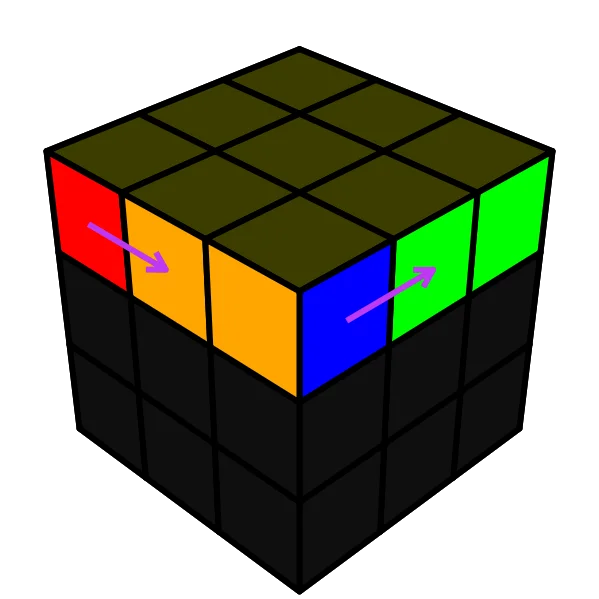
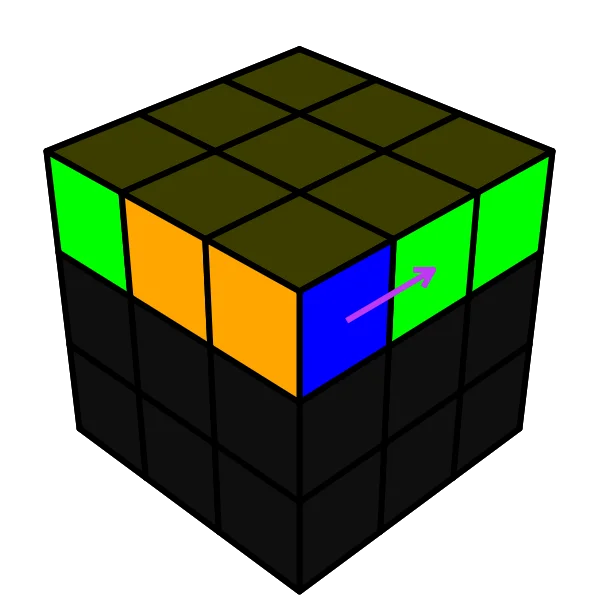
Furthermore, the long bar on J-perms is always on the opposite side of the side with the opposite colored match stick (see picture).
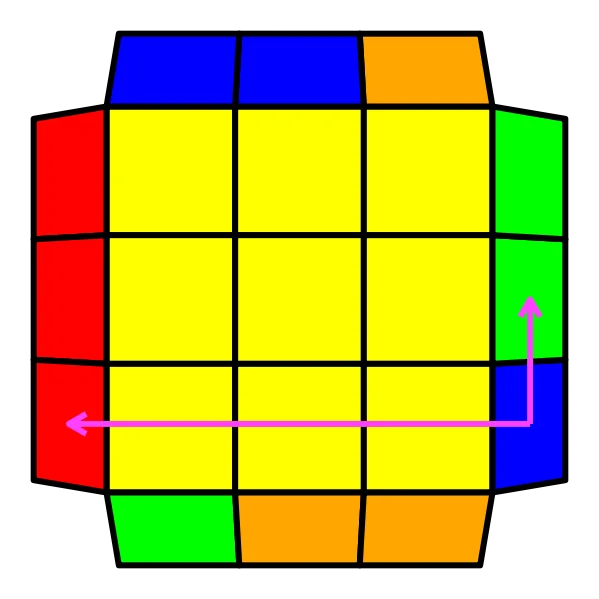
Side note: The most popular Jb-perm algorithm fixes the corner piece containing the said match stick head.
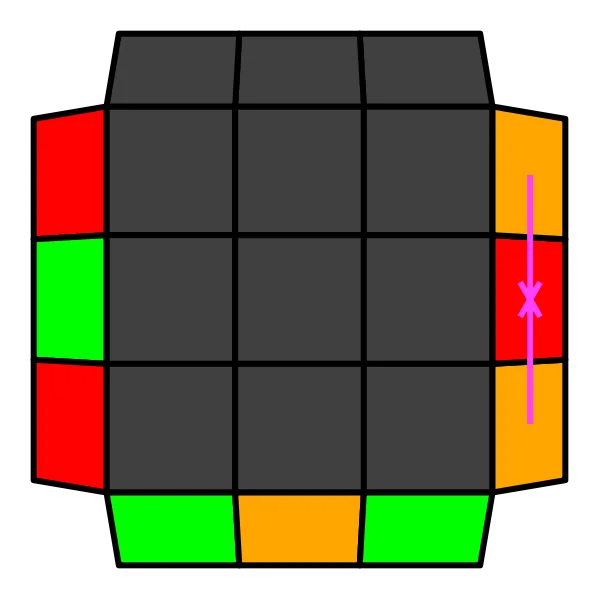
One troublesome case is when you see neither the long bar nor the unique center, such as in the following cases:
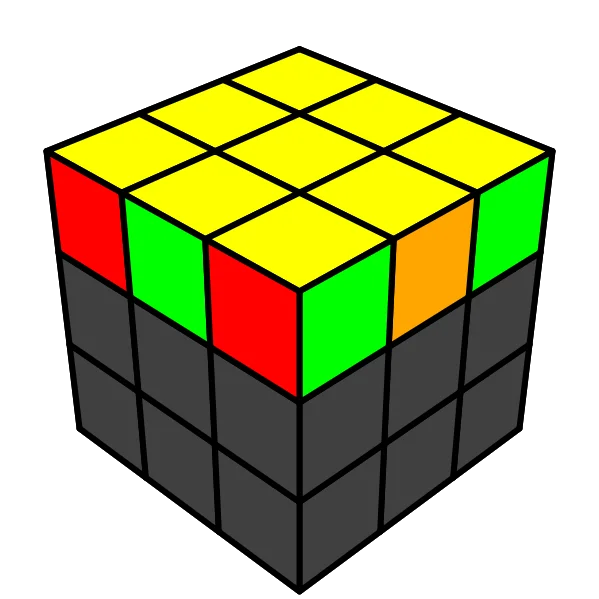
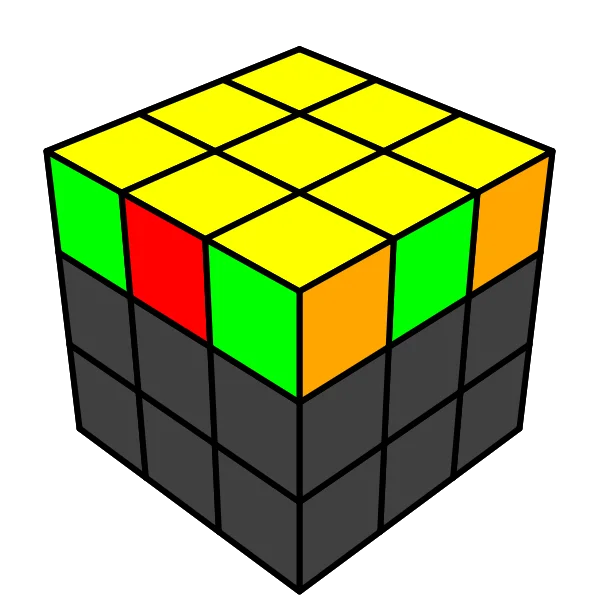
In such cases, look for the side with the pattern ABAB, and the unique center is always on the opposite side of it.
Case 1: Headlights are visible
In this guide, we show examples where the feature being discussed resides on the left side, but you should be able to mirror the cases if they appear on the right side.
There are 9 possible cases: T, Ra, Rb, the four horsemen of G-perms, and the two A-perms.
T v.s. Ra v.s. Rb
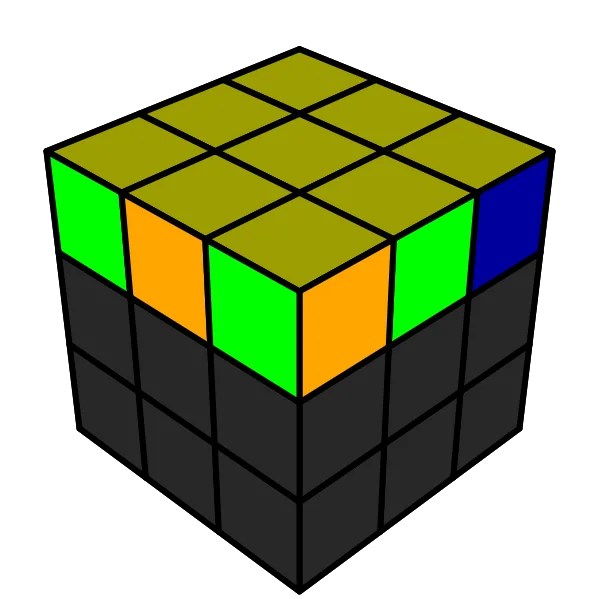
Rb can be easily eliminated as it has a very distinctive ABABA pattern:
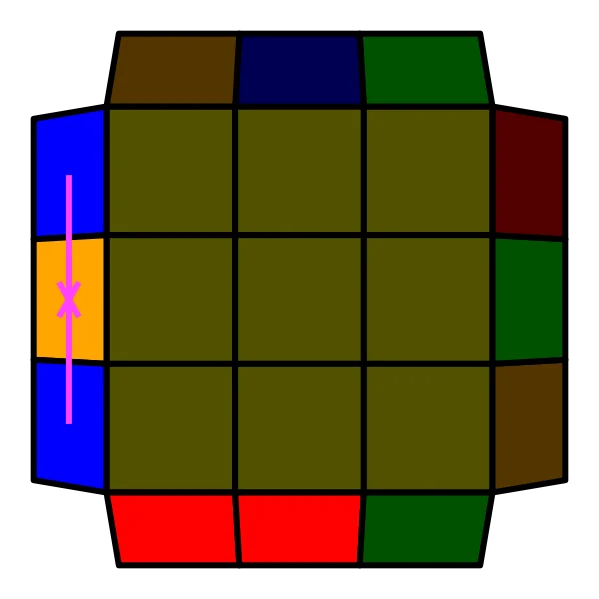
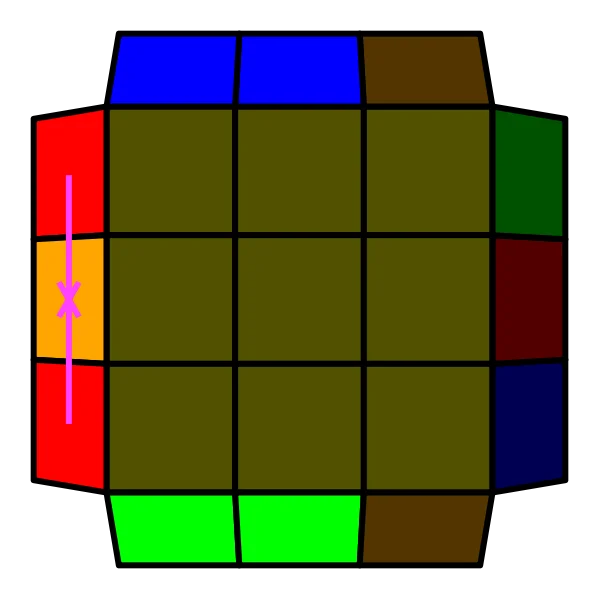
To tell the T-perm and Ra-perm apart, normally we would need to peek at the back side to see if there is another bar adjacent to the headlights. A better way to do it would be to check whether the center eye between the headlights is of an adjacent color (which means Ra) or the opposite color (which means T).
G-perms v.s. A-perms
We memorize the features of the four G-perms first, and A-perms can be thought of as their variations.
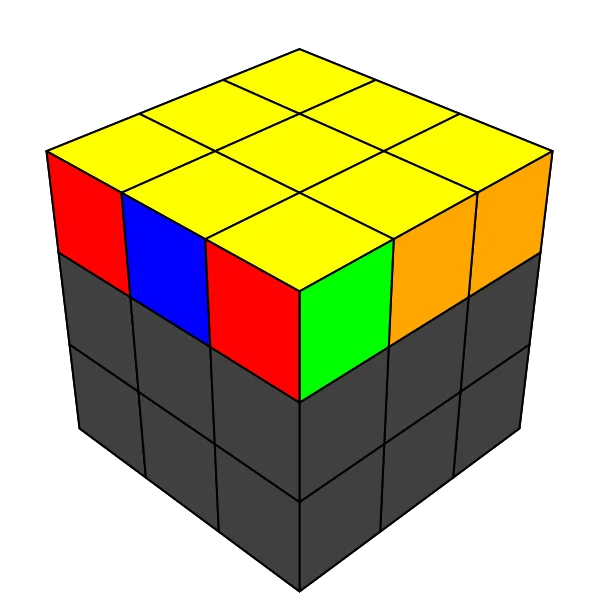
Ga-perm has an adjacent-colored center eye with an "ear" that is separated from its headlights. This should be how most people identify this case when they learned full PLL:
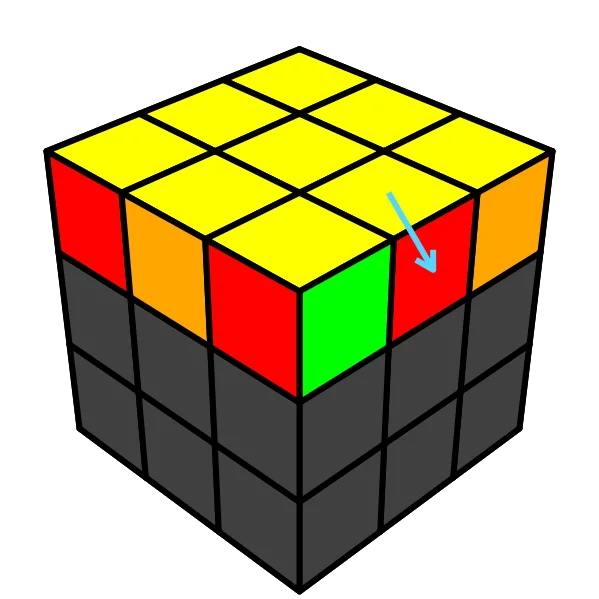
Gd-perm has an opposite-colored center eye with a "beauty mark" (see picture) on the other side. If you prefer letters over analogies, memorize it as ABACA, but remembering that B is the opposite color of A is important:
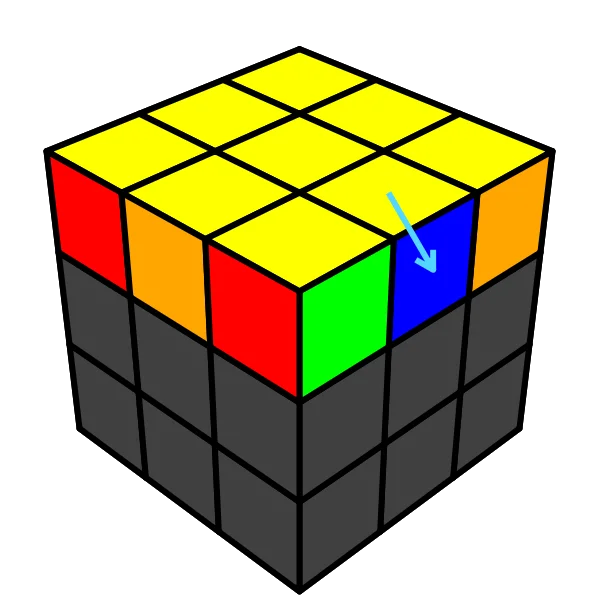
Gb-perm is similar to Gd-perm, but without a beauty mark:
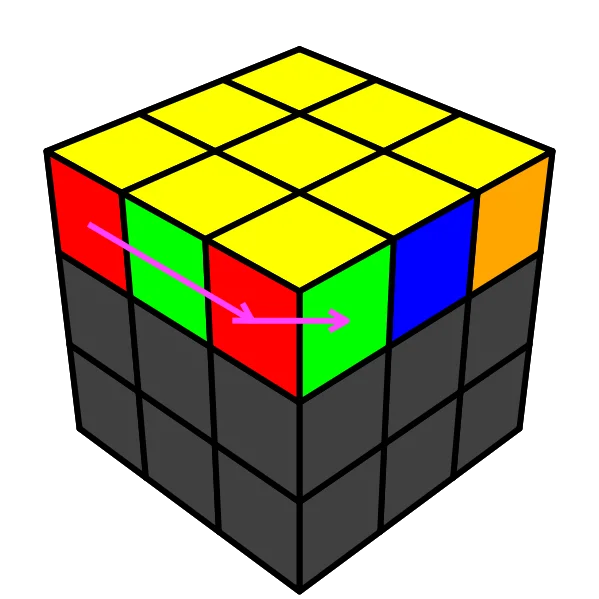
Gc-perm has a very distinctive ABAB pattern, with no ear:
Aa-perm can be thought of as a variation of the Ga-perm or Gc-perm. It is a Ga-perm but with a "connected" ear, or a Gc-perm but with an ear. Or, remember it as ABABCC:
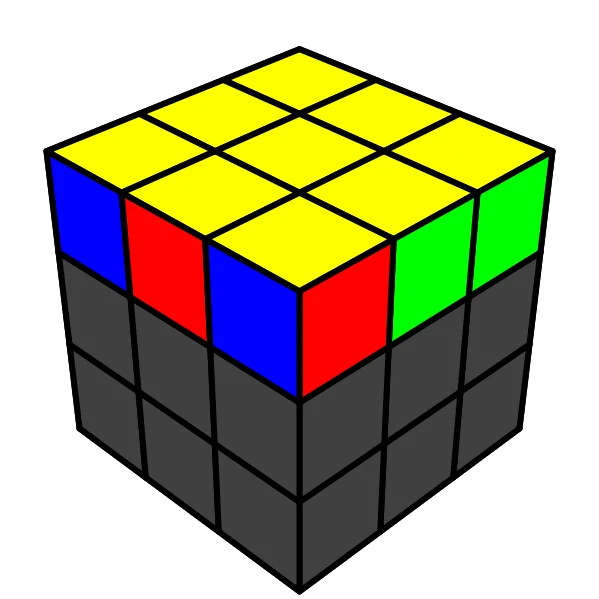
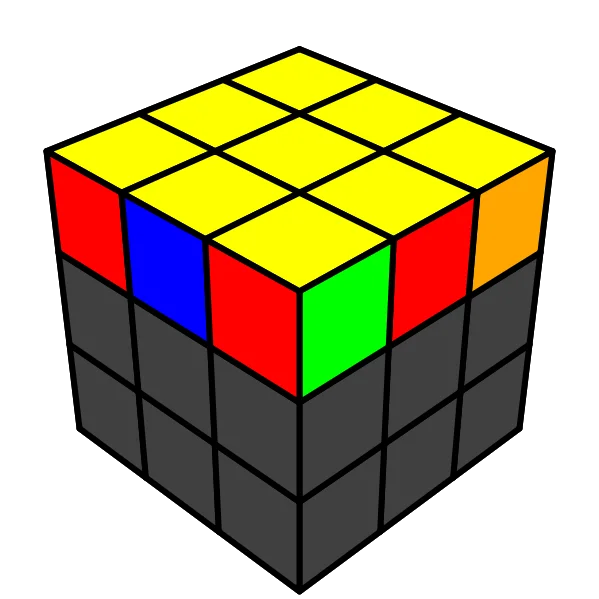
Ab-perm can be thought of as a variation of the Gd-perm. It is a Gd-perm but with adjacent-colored center eye. It is the reason why simply remembering Gd as ABACA is not enough:
Case 1.5: How to quickly locate headlights
If you don't want to learn the rest of the guide for now, you can learn a two-look version of it by knowing the following trick to find headlights by looking at only two sides.
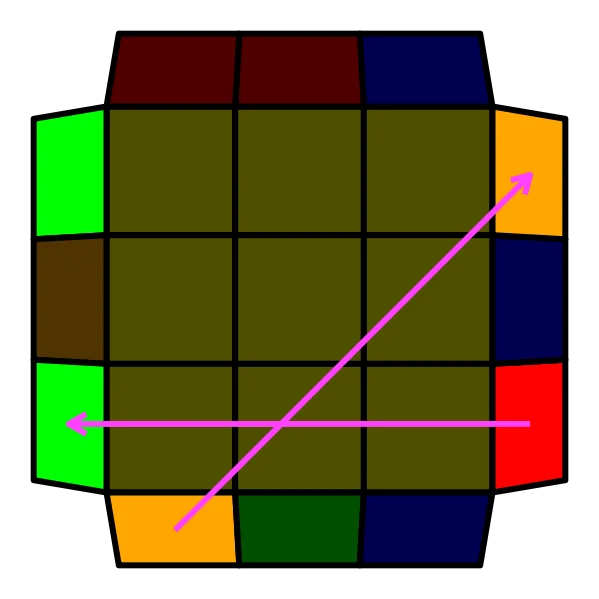
If you don't see headlights on the two side facing you, check whether the left-most and right-most stickers are of the same color. This is called "bookends". If you don't see bookends, then it means that there are no headlights in this PLL and it is an opposite corner swap (so one of E-perm, V-perm, or Y-perm). If you do, check the corner piece pointing towards you and locate the sticker that is of the opposite color to the bookends. The headlights are always to the opposite side of that sticker.
Next we will examine the rest of the cases: A bar at the center, a bar on the side, and nothing (garbage case). Cases with two bars are either already the most prominent feature of that PLL, or already discussed in Case 0.
Instead of just organizing another library of cases and patterns, I will try to give a full step-by-step guide to my method of recognizing PLL cases, which is made up of manageable sub-steps to distinguish between similar cases. It also has a simpler two-look version, where one first locate the headlight by looking at only two sides (or check that there isn't one).
All images are generated with Puzzle-Gen by tdecker91. I may make a portable pdf later if there is a demand for it.
====================================
Preliminaries
You should already know full PLL (21 cases), and can recognize all PLL cases instantly if you can see all four sides. You should also be able to instinctively tell whether two colors are opposite or adjacent to each other (you do not need to be able to distinguish between left- and right-adjacency).Case 0: Easy cases we shall not consider later
We will skip some very easy cases if they appear with their most prominent features already visible, such as F-perm with its long bar visible, or A-perms, V-perms, and Y-perms with their two bars visible. I will also assume you can recognize H-perm, and Z-perm and can distinguish them from the two U-perms from any side.
There are only two set of cases that are worth mentioning for once. They are: N-perms v.s. J-perms, and Ua v.s. Ub-perm.
N-perms v.s. J-perms
These cases may look similar when you can't see the long bar on J-perms. One way to tell them apart is by looking at the color of the "heads" of the "match sticks" relative to their body. On both sides of the two N-perms, the heads have color opposite to their body, but on J-perms, only one side appears with opposite colored match stick.
Furthermore, the long bar on J-perms is always on the opposite side of the side with the opposite colored match stick (see picture).
Side note: The most popular Jb-perm algorithm fixes the corner piece containing the said match stick head.
Ua-perm v.s. Ub-perm
If you are still mentally shuffling the edges around to tell the two U-perms apart, don't. Instead, you should look for the unique side with the opposite-colored center, as shown in the image below.One troublesome case is when you see neither the long bar nor the unique center, such as in the following cases:
In such cases, look for the side with the pattern ABAB, and the unique center is always on the opposite side of it.
Case 1: Headlights are visible
In this guide, we show examples where the feature being discussed resides on the left side, but you should be able to mirror the cases if they appear on the right side.
There are 9 possible cases: T, Ra, Rb, the four horsemen of G-perms, and the two A-perms.
T v.s. Ra v.s. Rb
Rb can be easily eliminated as it has a very distinctive ABABA pattern:
To tell the T-perm and Ra-perm apart, normally we would need to peek at the back side to see if there is another bar adjacent to the headlights. A better way to do it would be to check whether the center eye between the headlights is of an adjacent color (which means Ra) or the opposite color (which means T).
G-perms v.s. A-perms
We memorize the features of the four G-perms first, and A-perms can be thought of as their variations.
Ga-perm has an adjacent-colored center eye with an "ear" that is separated from its headlights. This should be how most people identify this case when they learned full PLL:
Gd-perm has an opposite-colored center eye with a "beauty mark" (see picture) on the other side. If you prefer letters over analogies, memorize it as ABACA, but remembering that B is the opposite color of A is important:
Gb-perm is similar to Gd-perm, but without a beauty mark:
Gc-perm has a very distinctive ABAB pattern, with no ear:
Aa-perm can be thought of as a variation of the Ga-perm or Gc-perm. It is a Ga-perm but with a "connected" ear, or a Gc-perm but with an ear. Or, remember it as ABABCC:
Ab-perm can be thought of as a variation of the Gd-perm. It is a Gd-perm but with adjacent-colored center eye. It is the reason why simply remembering Gd as ABACA is not enough:
Case 1.5: How to quickly locate headlights
If you don't want to learn the rest of the guide for now, you can learn a two-look version of it by knowing the following trick to find headlights by looking at only two sides.
If you don't see headlights on the two side facing you, check whether the left-most and right-most stickers are of the same color. This is called "bookends". If you don't see bookends, then it means that there are no headlights in this PLL and it is an opposite corner swap (so one of E-perm, V-perm, or Y-perm). If you do, check the corner piece pointing towards you and locate the sticker that is of the opposite color to the bookends. The headlights are always to the opposite side of that sticker.
Next we will examine the rest of the cases: A bar at the center, a bar on the side, and nothing (garbage case). Cases with two bars are either already the most prominent feature of that PLL, or already discussed in Case 0.
Attachments
Last edited: