

7ombie
Regular
> A pole piece is a structure composed of material of high magnetic permeability that serves to direct the magnetic field produced by a magnet. A pole piece attaches to and in a sense extends a pole of the magnet, hence the name. -- Wikipedia | Pole Pieces
Pole pieces not only allow us to easily change the shape of a magnet, we can also redirect the flux through the pieces, so the poles no longer need to be at opposite ends.
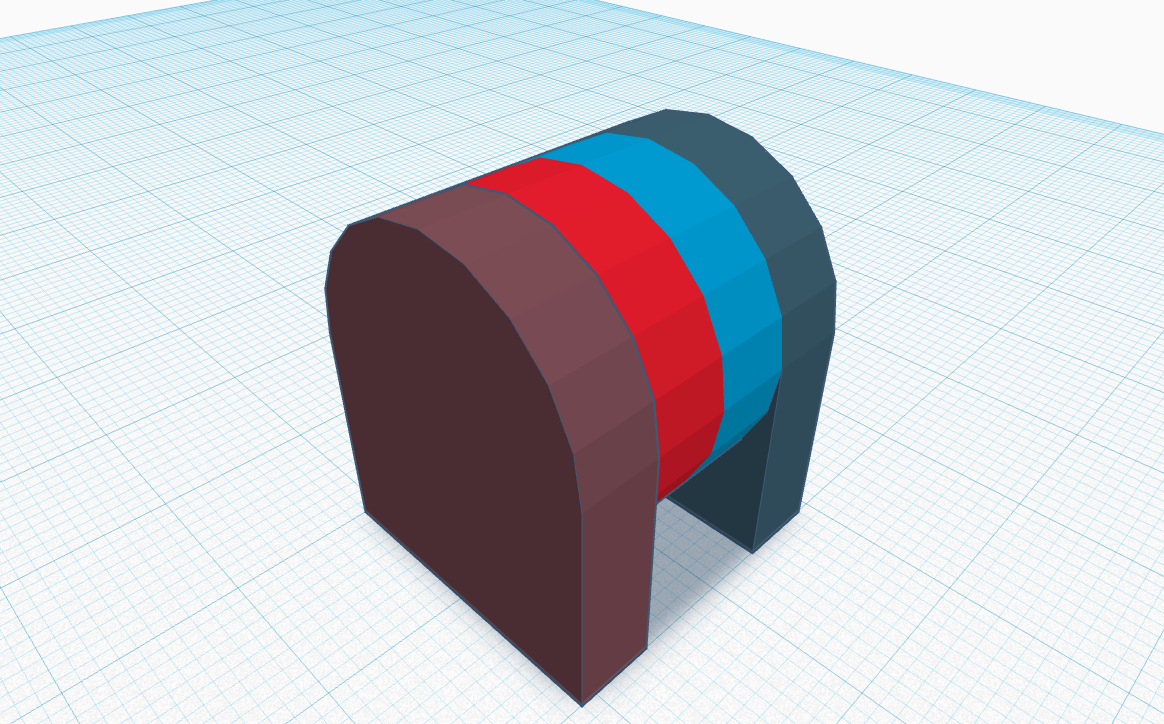
The most obvious application of pole pieces (for magnetic cubes) would be to move each pole 90 degrees from the axis of the magnet, so both poles interact with the magnet in any adjacent piece, roughly doubling the effect. This could be achieved by simply attaching a pair of tombstone-shaped pole-pieces to each pole of a regular (axially-aligned, pill-shaped) magnet, as in this first image.
Note: The poles are on the very bottoms of the pole pieces (pointing downwards in the image). These poles also have a reduced surface area, so the flux would be denser at the poles.
Note: Here, I'll use iron to refer to any suitable material for the pole pieces. In practice, it would likely be a specialized alloy, like Permalloy.
In the images used here, the poles of the magnets are highlighted with bright red and blue, while the iron pole pieces are highlighted with dull red and blue to indicate their polarization (due to the influence of the magnet).
These magnetic assemblies would replace each magnet in a regular mod, one for one, and can be used with the Elite Mod, Xyzzy Mod et cetera. The assemblies are oriented to align with the corners of each piece, and the polarity is handled as in the regular mods, except that the polarity of each piece is determined by which of its magnet's poles is furthest from the core (and not the pole that is presented to adjacent pieces).
Below-left, is a 2D magnet map, showing how pole pieces would be applied to the 48 magnets in a conventional magnetized cube, with a 3D version of the same map below-right.
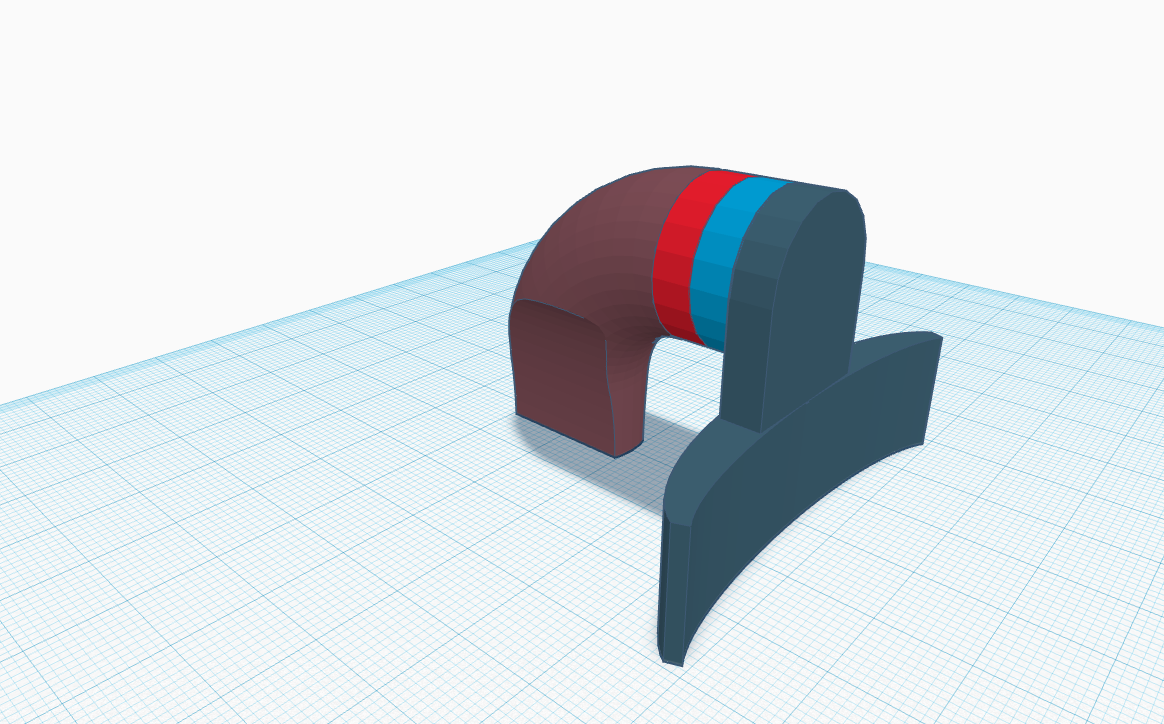
The shape of the pole pieces can be optimized in a bunch of different ways, and can be different for each pole. Below is an example where the pole nearest to the core has a long, rounded pole piece (that would allow the magnets to interact over greater distances, while the pole furthest from the core has a smaller (more concentrated), flat pole piece, designed to increase the precision of the overall effect.
Note: In practice, the pole-pieces would not need to be so bulky.
There are a bunch of ways pole pieces that can be applied, both to enhance and mute magnetic effects (even down to effectively being able to turn permanent magnets on and off by rotating them). Here, I just wanted to post an introduction, as I keep mentioning pole pieces in passing, but never really elaborate on what I mean.
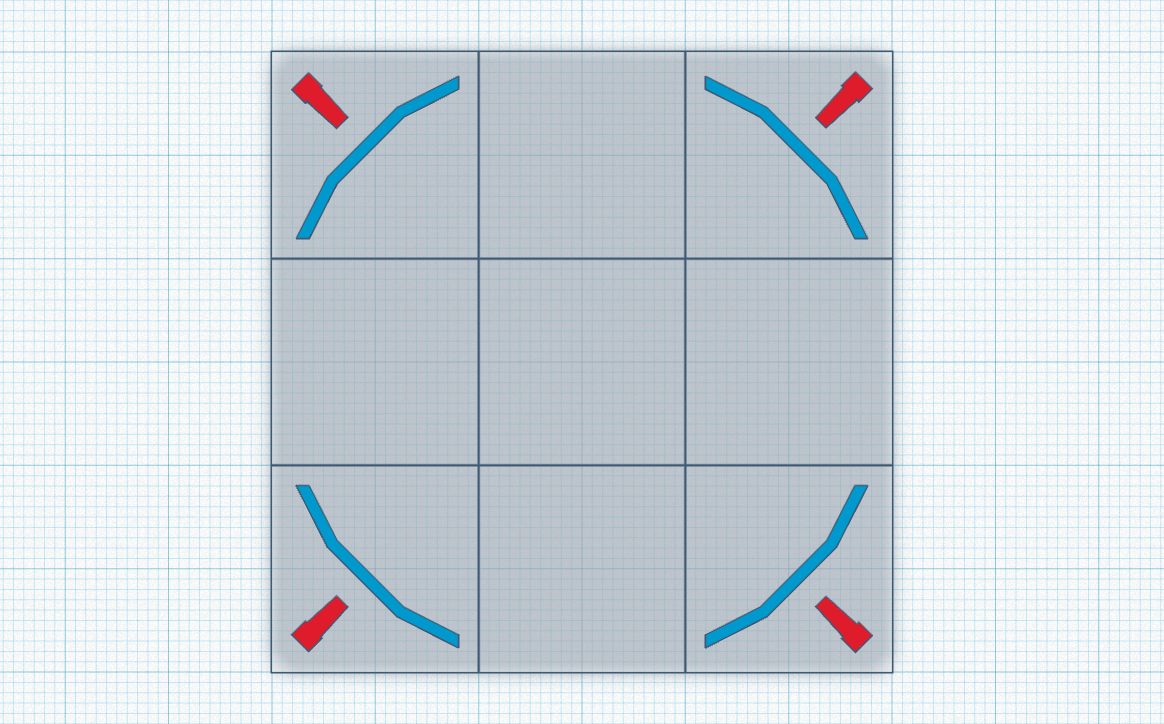
To the right is an image showing a roughly optimal profile for the pole pieces, relative to the internal faces of a single layer. Again, the scale is not important. The image just illustrates the underlying idea.
For those that have followed my recent posts, note that the longer pole pieces would be similar in effect to the system GAN introduced for their 11th generation Pro and Duo cubes :]
Pole pieces not only allow us to easily change the shape of a magnet, we can also redirect the flux through the pieces, so the poles no longer need to be at opposite ends.
The most obvious application of pole pieces (for magnetic cubes) would be to move each pole 90 degrees from the axis of the magnet, so both poles interact with the magnet in any adjacent piece, roughly doubling the effect. This could be achieved by simply attaching a pair of tombstone-shaped pole-pieces to each pole of a regular (axially-aligned, pill-shaped) magnet, as in this first image.
Note: The poles are on the very bottoms of the pole pieces (pointing downwards in the image). These poles also have a reduced surface area, so the flux would be denser at the poles.
Note: Here, I'll use iron to refer to any suitable material for the pole pieces. In practice, it would likely be a specialized alloy, like Permalloy.
In the images used here, the poles of the magnets are highlighted with bright red and blue, while the iron pole pieces are highlighted with dull red and blue to indicate their polarization (due to the influence of the magnet).
These magnetic assemblies would replace each magnet in a regular mod, one for one, and can be used with the Elite Mod, Xyzzy Mod et cetera. The assemblies are oriented to align with the corners of each piece, and the polarity is handled as in the regular mods, except that the polarity of each piece is determined by which of its magnet's poles is furthest from the core (and not the pole that is presented to adjacent pieces).
Below-left, is a 2D magnet map, showing how pole pieces would be applied to the 48 magnets in a conventional magnetized cube, with a 3D version of the same map below-right.
The shape of the pole pieces can be optimized in a bunch of different ways, and can be different for each pole. Below is an example where the pole nearest to the core has a long, rounded pole piece (that would allow the magnets to interact over greater distances, while the pole furthest from the core has a smaller (more concentrated), flat pole piece, designed to increase the precision of the overall effect.
Note: In practice, the pole-pieces would not need to be so bulky.
There are a bunch of ways pole pieces that can be applied, both to enhance and mute magnetic effects (even down to effectively being able to turn permanent magnets on and off by rotating them). Here, I just wanted to post an introduction, as I keep mentioning pole pieces in passing, but never really elaborate on what I mean.
To the right is an image showing a roughly optimal profile for the pole pieces, relative to the internal faces of a single layer. Again, the scale is not important. The image just illustrates the underlying idea.
For those that have followed my recent posts, note that the longer pole pieces would be similar in effect to the system GAN introduced for their 11th generation Pro and Duo cubes :]
Last edited:


