

sm
Regular
- Joined
- Oct 6, 2013
- Messages
- 44
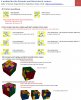
In this method I use one simple principle which I call "three".
Main algorithm: (R' D' R) U' (R' D R) U2 (R' D' R) U' (R' D R)
Mirror version: (F D F') U' (F D' F') U2 (F D F') U' (F D' F')
Main principle: (direct three) setup move (back three) …
Using only this principle and simple setup moves we possible to resolve any situations with 4 corners.
PDF-version of manual - http://vk.com/doc185254069_237356447


For bigger understanding about what I speak please see video from 4:41 - http://youtu.be/3v_FBBlPCCQ?t=4m41s
I show as to resolve different situations using only this principle.
In the case 1 (Corners not on their places) I show 3 different situations which I resolve using only one algorithm:
The сase 1 is self-sufficient.
To understand the principle please watch my videos with subtitles in English (there I show all situations):
The same principle can be used for Megaminx.
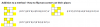
A variant of permute corners/edges - http://www.youtube.com/watch?v=wHmQhlhXs3w
Corners - (L R D2) (R' U' R) D2 (R' U L')
Edges - (L R E2) (R' U' R) E2 (R' U L')
How to Permute and Flip 3 edges with using direct and back moves.
PDF-version of manual - http://vk.com/doc185254069_240546847

How it works at big cubes - http://vk.com/doc185254069_240716614
Video-demonstration - http://youtu.be/mR9k00BruAU
How to Permute and Flip 3 edges using the "three" move
PDF-версия документа - http://vk.com/doc185254069_251593577

Main algorithm: (R' D' R) U' (R' D R) U2 (R' D' R) U' (R' D R)
Mirror version: (F D F') U' (F D' F') U2 (F D F') U' (F D' F')
Main principle: (direct three) setup move (back three) …
Using only this principle and simple setup moves we possible to resolve any situations with 4 corners.
PDF-version of manual - http://vk.com/doc185254069_237356447
For bigger understanding about what I speak please see video from 4:41 - http://youtu.be/3v_FBBlPCCQ?t=4m41s
I show as to resolve different situations using only this principle.
In the case 1 (Corners not on their places) I show 3 different situations which I resolve using only one algorithm:
- All 3 corners are yellow up - http://youtu.be/3v_FBBlPCCQ
- From 3 corners only one is yellow up - http://youtu.be/3v_FBBlPCCQ?t=4m41s
- All 3 corners aren't yellow up:
- We have corners coinciding with the central color - http://youtu.be/3v_FBBlPCCQ?t=13m45s
- We haven't corners coinciding with the central color - http://youtu.be/3v_FBBlPCCQ?t=18m35s
The сase 1 is self-sufficient.
To understand the principle please watch my videos with subtitles in English (there I show all situations):
- Case 1 - Corners not on their places - http://www.youtube.com/watch?v=3v_FBBlPCCQ
- Case 2 - Corners on their places - http://www.youtube.com/watch?v=HPZCvxKrWbM
Corners on their places (variant 2) - http://www.youtube.com/watch?v=jB7fFm7Tk3A
Corners on their places (variant 3) - http://www.youtube.com/watch?v=ckRfTKzm-iM
The same principle can be used for Megaminx.
A variant of permute corners/edges - http://www.youtube.com/watch?v=wHmQhlhXs3w
Corners - (L R D2) (R' U' R) D2 (R' U L')
Edges - (L R E2) (R' U' R) E2 (R' U L')
How to Permute and Flip 3 edges with using direct and back moves.
PDF-version of manual - http://vk.com/doc185254069_240546847
How it works at big cubes - http://vk.com/doc185254069_240716614
Video-demonstration - http://youtu.be/mR9k00BruAU
How to Permute and Flip 3 edges using the "three" move
PDF-версия документа - http://vk.com/doc185254069_251593577
Attachments
Last edited:


