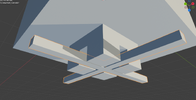
Loopover mechanism concept

  • Thread starter Thread starter Deleted member 36445
  • Start date Start date
sorry for video potato quality but there are actually "curved rails" beside each row and column of pieces

1747430597043.png


1747430618539.png
 
Thinking of it on a 2 dementional plane.

You can not have a tile that moves on the y and x axes.

If you look closer at the corner tile, you will see that it is attached to 2 rods. As is, this tile- and therefore all of them- can't actually move either on the x or y axis.

1747430597043-png.40574

This idea would have to be refined more on the mechanical side, but it is a cool idea.

is this what you mean right?

1747434749140.png


well that is a problem, but I don't have a quick fix for it and I don't plan to create a solution.

I just wanted to share the concept of physical loopover, and let the puzzle makers figure that stuff out.

Maybe this concept could be a incentive for puzzle makers to work on a physical loopover puzzle
 

Attachments

  • 1747434597964.png
    1747434597964.png
    745.6 KB · Views: 0
How would you get it to go through the rails? I imagine without magnets or something, some of the tiles might get stuck under the puzzle.
I really think magnets would be a better way to implement this concept, similar to the way bullet trains work. when you slide a tile out of bounds, it slides so fast it pushes the other tiles to their places

maybe using bearings + magnets would be a good way of implementing it.

but thinks of the curves as the "path" the pieces should travel to make the puzzle possible ;)
 
If each tile could instead slide through a 'trench', it would fix my problem.

And a magnet that kept the pieces connected or snapped into the top (like corner magnets in the core) would fix the other.
 
If each tile could instead slide through a 'trench', it would fix my problem.

And a magnet that kept the pieces connected or snapped into the top (like corner magnets in the core) would fix the other.

what about this?
1747443036950.png


1747443067922.png


it would be a similar mechanism to the V-sphere but to use it the tiles should all be on front face or the moves would be illegal

 
Back
Top