• Welcome to SpeedSolving.com — the world’s largest puzzle community!

    You’re currently browsing as a guest, which means you have limited access to discussions, resources, member profiles, and community features.

    Join 50,000+ cubers and puzzle enthusiasts from around the world to ask questions, share solves, improve faster, and be part of the community.

    Registration is free, fast, and easy — create your account today.

    Already a member? Log in here to hide this message and start participating.

How should I memorise coll?

n0nco

Member
Joined
Oct 31, 2022
Messages
414
Location
bri'ain
WCA
2024DORP01
Hello!
I’m trying to learn coll, and am struggling with recognition.

So what should I do for recognition of the colls? I’ve basically split it up into the orientation, the colours on top, and then I don’t know what else to look at, thanks!
 
COLL? What you dont need that now.
Ok firstly, this statement is probably true. I learnt coll at 15 secs but it really doesn’t matter if you want to do it or not. You just must know when and when not to use it. My recog was just oll and then look for which colours were where on the top and whether the colors were opposite adjacent or the same colour
 
Ok firstly, this statement is probably true. I learnt coll at 15 secs but it really doesn’t matter if you want to do it or not. You just must know when and when not to use it. My recog was just oll and then look for which colours were where on the top and whether the colors were opposite adjacent or the same colour
COLL? What you dont need that now.
I'm going to be honest, I probably don't need it, but I find learning algs fun, so I want something to do.

any tips tho?
 
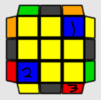
For the H and Pi algs, you can get away with just recognizing the colors on top. For L, T and U, start by looking at the two colors on top. In the case of L, I look at the the top two stickers, as well one additional another sticker
1701107951118.pngI recognize this case by seeing that 1 and 2 are the same color, and 3 is adjacent to this color (i.e, if the top color is blue, 3 should not be green)
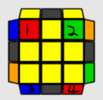
For T and U, I tend to look position the top two stickers on the B face, then I look at the two stickers on the F face (although I use different recognition methods for some cases).
1701107811636.png I recognize this case by seeing that 1 and 4 are the same color, and seeing that 2 and 3 are not opposite to this color

I'm sure there are other ways people go about it, but that's how I recognize COLL. You can come up with your own ways of recognizing COLL by finding similar patterns, just make sure that they hold true for only one COLL case.
 
Learn ZBLL if you want to learn more algs beyond OLL/PLL. You can learn one COLL set at a time--12 algs is very manageable to learn and is substantial enough to satisfy your thirst for algs.

COLL is a fantastic intro into ZBLL; assuming they already know OLL/PLL, COLL is a logical next alg set. After that if they still want to learn more I’d recommend they dip their feet into learning ZBLL
 
COLL is a fantastic intro into ZBLL; assuming they already know OLL/PLL, COLL is a logical next alg set.
All COLL algorithms are ZBLL algorithms. Since COLL/EPLL is a poor approach to LL and a poor habit overall, I'd say that it's better to learn the algs in terms of whether it solves LL in one look and get in a habit of recognizing EP. Put simply: it's more valuable to have 42 ZBLL's under your belt rather than 42 COLL's.
 
All COLL algorithms are ZBLL algorithms. Since COLL/EPLL is a poor approach to LL and a poor habit overall, I'd say that it's better to learn the algs in terms of whether it solves LL in one look and get in a habit of recognizing EP. Put simply: it's more valuable to have 42 ZBLL's under your belt rather than 42 COLL's.

The benefit to learning COLL is that the different COLL cases are a good way to separate ZBLL algs, plus it teaches you the basics of recognition in the form of CP. It isn’t particularly beneficial to LL (although I definitely find it quite fast for some cases), but it isn’t harmful and is a good first taste with a clear, close end point.
 
COLL is quite cool, and you can get quite a lot of PLL skips with it. Because I have a good bit of 2x2 knowledge, I know a few COLLs, and today, I got two pairs of consecutive PLL skips. I do agree with ruffle duck on recognizing EP, for easy COLLs, it could be good to know when you will get a PLL skip, and with enough solves, you could also start to predict H Perms, or the back of U perms.
 
The problem with ZBLL is the sheer size, and I've got a comp coming up, and i cant get anything useful in 43 days, and I've set myself to learning VHF2L (Basically basic ZBLS) and COLL to profit from that, and I know this is probably stupid.

The benefit's of COLL is, as Prostar said, learning recognition, and hey 5 chances at a 1/12 in a comp average is very enticing, so for now I shall proceed with VHF2L and COLL, until I have a clear reason to either learn something else, or just practice like hell.
 
The problem with ZBLL is the sheer size, and I've got a comp coming up, and i cant get anything useful in 43 days,
and I've set myself to learning VHF2L (Basically basic ZBLS) and COLL to profit from that, and I know this is probably stupid.
Just practice and improve your OLL/PLL algs. COLL is not going to help and VHF2L is actually going to make you slower.
The benefit's of COLL is, as Prostar said, learning recognition, and hey 5 chances at a 1/12 in a comp average is very enticing, so for now I shall proceed with VHF2L and COLL, until I have a clear reason to either learn something else, or just practice like hell.
Suit yourself. Most top cubers say that learning algs right before comps is a poor idea
 
The problem with ZBLL is the sheer size, and I've got a comp coming up, and i cant get anything useful in 43 days, and I've set myself to learning VHF2L (Basically basic ZBLS) and COLL to profit from that, and I know this is probably stupid.

The benefit's of COLL is, as Prostar said, learning recognition, and hey 5 chances at a 1/12 in a comp average is very enticing, so for now I shall proceed with VHF2L and COLL, until I have a clear reason to either learn something else, or just practice like hell.

It’s up to you, but I wouldn’t recommend VHLS. There isn’t really any reason to force EO on the last pair’s insert unless it’s with a sledge/hedge or maybe to avoid a dot case. You’re better off learning basic EO influencing and doing OLL/PLL when there isn’t a good place to use it
 
Hello!
I’m trying to learn coll, and am struggling with recognition.

So what should I do for recognition of the colls? I’ve basically split it up into the orientation, the colours on top, and then I don’t know what else to look at, thanks!
You have to use a technique called CLL recognition in order to recognize the cases


It is a 2x2 technique, but since it applies to the corners, and COLL recognition requires you to recognize the corners, you can apply it to 3x3.

There are tutorials for CLL recognition on youtube.
 
It’s up to you, but I wouldn’t recommend VHLS. There isn’t really any reason to force EO on the last pair’s insert unless it’s with a sledge/hedge or maybe to avoid a dot case. You’re better off learning basic EO influencing and doing OLL/PLL when there isn’t a good place to use it
Just practice and improve your OLL/PLL algs. COLL is not going to help and VHF2L is actually going to make you slower.

Suit yourself. Most top cubers say that learning algs right before comps is a poor idea
I think I'll try practicing OLL/PLL, when learning I didn't acknowledge triggers, so that may help me, thanks for all the advice!
 
Back
Top