
Hi everyone,
I want to share a small but very practical finding about edge pairing in 4x4 reduction. It saves moves and feels much smoother than the standard approach.
1. The Problem
In the standard reduction method, edge pairing is the most tedious part.
The conventional slot is:
- Reference dedge at FL-bottom (front-left, bottom wing)
- Target dedge at FR-bottom (front-right, bottom wing)
- Formula: d R F' U R' F d' (7 moves)
The issue: if your target piece is not at FR-bottom, you have to adjust it there first. This is clunky and breaks the flow.
2. A New Slot
Through practice, I found that when the reference piece is at FL-bottom, if the target piece happens to be at FR-upper (front-right, upper wing), you can pair it directly without any adjustment:
d R U R' d' (5 moves)
This is not just 2 moves shorter. If you count the setup moves needed to bring a piece from FR-upper down to FR-bottom (typically ~4 moves), you actually save 6 moves total.
Even better: the formula uses only d, R, and U. There is no F or F' to break your hand position, so the execution is much more fluid.
And there is zero extra memorization burden. The first move d sets up the alignment, R U R' is the natural sexy-move insertion, and d' restores the layer. The last four moves are automatic once you start.
Fig. 1: New Slot (Reference at FL-bottom, Target at FR-upper)
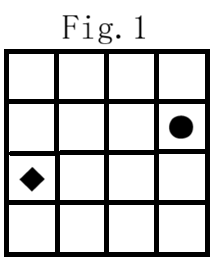
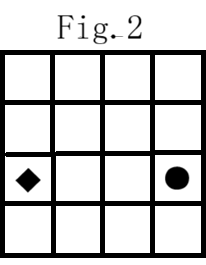
Fig. 2: Conventional Slot (Reference at FL-bottom, Target at FR-bottom)
3. Why Call It "New"?
Almost all tutorials focus exclusively on the FR-bottom slot. When the target is elsewhere, the standard advice is "move it to FR-bottom first, then execute the formula."
Very few people seem to notice that FR-upper is directly usable. Because the two wings on the FR edge have opposite orientations, the position itself determines the correct color alignment:
- Target at FR-bottom -> use the conventional formula
- Target at FR-upper -> use the new formula
No case-checking needed. The position tells you which formula to use.
4. Note
This new slot is mainly for the first 10 dedges. When you reach the last two dedges and they are in a crossed state, you still need the conventional formula to handle the parity-like situation.
5. Summary
This is a small discovery, but it makes edge pairing noticeably faster:
Conventional slot:
- Target: FR-bottom
- Formula: d R F' U R' F d'
- Moves: 7
- Setup: 0
New slot:
- Target: FR-upper
- Formula: d R U R' d'
- Moves: 5
- Setup: 0
Both formulas are fully complementary. The position itself decides which one to use.
I have tested this extensively in actual solves. If you are learning or practicing 4x4 reduction, give it a try and let me know what you think!
Important note on setup:<br>This formula assumes the U-R dedge is either unsolved or can be temporarily disrupted during the pairing process. If all U-layer dedges are already paired, simply reorient the cube (e.g., treat the right face as the new front face) to bring an unsolved dedge into the U-R position before executing the algorithm. This is standard practice in edge pairing and applies to the conventional formula as well.
Tags: 4x4, reduction, edge pairing, tutorial
Disclaimer: This is my original work. Please do not repost without permission.
I want to share a small but very practical finding about edge pairing in 4x4 reduction. It saves moves and feels much smoother than the standard approach.
1. The Problem
In the standard reduction method, edge pairing is the most tedious part.
The conventional slot is:
- Reference dedge at FL-bottom (front-left, bottom wing)
- Target dedge at FR-bottom (front-right, bottom wing)
- Formula: d R F' U R' F d' (7 moves)
The issue: if your target piece is not at FR-bottom, you have to adjust it there first. This is clunky and breaks the flow.
2. A New Slot
Through practice, I found that when the reference piece is at FL-bottom, if the target piece happens to be at FR-upper (front-right, upper wing), you can pair it directly without any adjustment:
d R U R' d' (5 moves)
This is not just 2 moves shorter. If you count the setup moves needed to bring a piece from FR-upper down to FR-bottom (typically ~4 moves), you actually save 6 moves total.
Even better: the formula uses only d, R, and U. There is no F or F' to break your hand position, so the execution is much more fluid.
And there is zero extra memorization burden. The first move d sets up the alignment, R U R' is the natural sexy-move insertion, and d' restores the layer. The last four moves are automatic once you start.
Fig. 1: New Slot (Reference at FL-bottom, Target at FR-upper)
Fig. 2: Conventional Slot (Reference at FL-bottom, Target at FR-bottom)
3. Why Call It "New"?
Almost all tutorials focus exclusively on the FR-bottom slot. When the target is elsewhere, the standard advice is "move it to FR-bottom first, then execute the formula."
Very few people seem to notice that FR-upper is directly usable. Because the two wings on the FR edge have opposite orientations, the position itself determines the correct color alignment:
- Target at FR-bottom -> use the conventional formula
- Target at FR-upper -> use the new formula
No case-checking needed. The position tells you which formula to use.
4. Note
This new slot is mainly for the first 10 dedges. When you reach the last two dedges and they are in a crossed state, you still need the conventional formula to handle the parity-like situation.
5. Summary
This is a small discovery, but it makes edge pairing noticeably faster:
Conventional slot:
- Target: FR-bottom
- Formula: d R F' U R' F d'
- Moves: 7
- Setup: 0
New slot:
- Target: FR-upper
- Formula: d R U R' d'
- Moves: 5
- Setup: 0
Both formulas are fully complementary. The position itself decides which one to use.
I have tested this extensively in actual solves. If you are learning or practicing 4x4 reduction, give it a try and let me know what you think!
Important note on setup:<br>This formula assumes the U-R dedge is either unsolved or can be temporarily disrupted during the pairing process. If all U-layer dedges are already paired, simply reorient the cube (e.g., treat the right face as the new front face) to bring an unsolved dedge into the U-R position before executing the algorithm. This is standard practice in edge pairing and applies to the conventional formula as well.
Tags: 4x4, reduction, edge pairing, tutorial
Disclaimer: This is my original work. Please do not repost without permission.
Attachments
Last edited:


