Update on Fortego...

Status
Not open for further replies.

DevMelonCubing

Regular
Joined
Jun 25, 2024
Messages
97
Location
Tacoma WA
YouTube
Visit Channel
so a quick repost of it, because idk, im bored

DMPM Method (OMOP+I/E)


O: Orientate First Layer (OFL)

For this first step, you must make the first face, like in the Ortega 2x2 Method.


M: Middle Layer (ML)

For this step, you must make the middle layer by using insert algs, it can be advanced, or it can be the CFOP beginner inserts.


O: Orientate Top Layer (OTL)

For this step, you must do basically OLL, but since it isn’t the last layer that must be completed to solve it, it is called the Top Layer, hence OTL.


P+I/E: Permutate Both Layers + In-between Parity Solving / End Parity Solving (PBL + IPS / EPS)

PBL 3x3: 3 Cases

0 BARS: Y Perm TCUD (Turn Cube Upside Down) Y Perm (YP TCUD YP)

1 BAR: Do Y Perm on the Y Perm Side & T Perm on the T Perm Side (DYotYPS/TPotTPS)

2 BARS: U2 R L F2 R L D’ B2 U F2 L2 F2 U’ B2 D’ L2


In-between/End Parity Solving Cases (IPS or EPS): 4 Cases

Parity 1 – Double 2 Edge Swap: R2 U R2 F2 R2 U2 F2 R2 F2 U R2

Parity 2 (OLL) – 2 Edge Swap: R U R' U R U2 R' U

Parity 3 & 4 – Double / Single Bar: M2 U2 M2 or (M2 U2)2


LSPBL (Last Step PBL): 5 Cases

4 Adjacent Edge and 3 Edge Swap: R L U2 R L U R2 B2 L2 D2 F2 B2 U’ M2

4 Opposite Edge and 3 Edge Swap: R L U2 R L D F2 R2 B2 U2 F2 B2 D’ M2

Double 3 Edge Swap: F B U2 F’ B U B2 D B2 L2 B2 D R2 D R2

Double 4 Opposite Edge Swap: M2 U2 M2 U2 S2 U2 S2 U2

Double 4 Adjacent Edge Swap: U R2 L2 D2 F2 B2 U R2 L2 S2
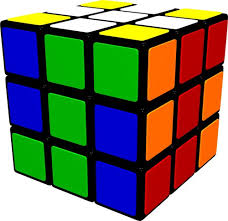
 

Filipe Teixeira was what he talking about FT or is my method FT?​

If you open the link I sent for the second time already and read the posts you will see that this method already exist.

FT method was developed by me in april 2023 and is basically the same method described by @Justincubes

Even before I started creating FT method there was already a similar method in development created by @Duncan Kimmett in january 2023.

But those type of methods are nothing new, as it involves belt and making a side, which are thing many people think about doing when they start cubing.

Please read carefully the documents I sent before here (click the link, you put your mouse over the link and press the mouse button or touch with your little finger and it will magically open (EDIT: ....if you're using a smartphone.)):


If you want to contribute to the community this is a good thing, but please make an extensive research before publishing something like a method, a good source is the wiki and the other following site:


And please avoid posting in the same thread after your own post, use the edit button if possible (avoid double posting or worse, triple posting, and so on)

Thanks and have fun
 
Last edited by a moderator:
also there is basically no more ideas that I can think of that is different from others... so honeslty, things that are similar to others might start to pop up, so why not have variants of methods?

I believe those are called subsets... i think...
 
so i looked at FT, and you said there is only one case right? Mine has multiple, and i believe my algs are different aswell, also it seems to be that FT might be more intuitive, if not more algorithmic, also i might think of 2FL after OBL instead of just ML

I'll try my best to make it not the same as FT, although it might still be similar... sadly...
 
oh... I meant as in similarities like faces on EG & Ortega, or like the blocks in Roux & Petrus
that's correct.

There are some very unique methods like CFOP, Petrus, Roux, ZZ, Nautilus, Mehta, Domino Reduction but there is not way to escape some basic concepts like block building, orientation, permutation, etc... that are things that methods use in some form or another to solve a set of pieces.
also there is basically no more ideas that I can think of that is different from others... so honeslty, things that are similar to others might start to pop up, so why not have variants of methods?
then I advise you to have a break on method creation. Try to study the already existent methods like the ones I mentioned, and you will learn a lot about it. Also you could study commutators and block buildind, because it's the base of all methods.

it's really hard to create a unique method because many people tried to create a unique method since the original Rubik's cube was created.

Also, you could take a look at past competitions of method creation, that happen here at SpeedSolving from time to time and maybe you can team up with someone to create a unique method, why not?

But study what already exist, it's really improbable that you will create something new without understanding the history and key concepts of the existent methods.

check these links please:

 
Last edited by a moderator:
so i looked at FT, and you said there is only one case right? Mine has multiple, and i believe my algs are different aswell, also it seems to be that FT might be more intuitive, if not more algorithmic, also i might think of 2FL after OBL instead of just ML

I'll try my best to make it not the same as FT, although it might still be similar... sadly...
one case to solve parity, which is M2 U2 M2, if you use this alg you reduce the alg count by a lot.

 Twizzle link 
M2 U2 M2


Try to solve the above case in your cube by just using pll algs on both layers.

You Cant Dragons Den GIF by CBC


then you're left with Permute Both Layer Corners (BCP) and Permute Both Layer Edges (BEP) so you can solve the PBL (Permute both layers) with 2 steps minus parity.
 
so I see there is some differences, that's good so they aren't 100% the exact same, but still very very similar, but like I said, who would ever team up with me to make one?


(Only by alg and case wise)
 
Andrew Robertson Ok GIF by Liverpool FC


I Am Trash GIF by Adult Swim


Read this first post too, it's related to this thread:


1719597383847.png
 
Status
Not open for further replies.
Back
Top