• Welcome to SpeedSolving.com — the world’s largest puzzle community!

    You’re currently browsing as a guest, which means you have limited access to discussions, resources, member profiles, and community features.

    Join 50,000+ cubers and puzzle enthusiasts from around the world to ask questions, share solves, improve faster, and be part of the community.

    Registration is free, fast, and easy — create your account today.

    Already a member? Log in here to hide this message and start participating.

Full LMCF 3x3 method now available

This method seems pretty cool, but I would like to know, how many algs for full LMCF?

It greatly depends, as the definition of 'full' depends on what sets you learn for the last 7 edges and this is even changing as Crafto came up with a remarkable L7E method. In my original LMCF document I have it listed as 776 algorithms for the full method, although it would really only be 300 or so as most are reflections of each other. Using Crafto's L7E method the number would drop dramatically to around 220 even with full EG. Of course you could take it even farther and learn TCLL and TEG-1 in which case the number continues to increase. This is actually a cool part of the method, in that there is endless room for improvement if you are willing to learn extra sets.

In my case you can check out my LMCF solves on youtube, I only use about 200 algorithms.
 
I found that it was 776, but how many of these do I need to learn to get fast? I'm not Chris Tran after all.
 
Well if you read in the document you can choose the beginner's version of LMCF, which only has around 30 algorithms and you can still get sub-13 or better, which is probably the fastest method available for so few algorithms.
 
I am learning beginner E2L but what do I do if I don't have one of the 3 cases?

Firstly check earlier in this thread where I go over intuitive E2L pair solving.
Second, if you still can't find an intuitive E2L pair and you don't know the algorithms, you solve one L/R edge piece, by placing the candidate edge in the M-slice at DFM or BDM, then using U/M'/U', U'/M'/U, U/M/U', or U'/M/U. This is called keyhole solving because you place an open slots at UL and UR, then solve either UL or UR.

Eric
Thanks!
 
Hi, I'm trying to learn the DFL algs but whenever I do one I always end up with not every piece oriented
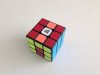
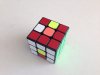
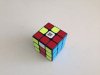
Are you sure you are doing the recognition correctly? Look at some examples below.
 

Attachments

  • IMG_3927.JPG
    IMG_3927.JPG
    80.6 KB · Views: 2
  • IMG_3929.JPG
    IMG_3929.JPG
    67.7 KB · Views: 1
  • IMG_3932.JPG
    IMG_3932.JPG
    73.8 KB · Views: 1
For the DFL set, referencing the above images as examples:
IMG_3927: All three edge pieces are disoriented [U' M' U' M' U' M U2 M U]
IMG_3929: The left and top edges are disoriented [U' M U M' U' M' U]
IMG_3932: The bottom edge is disoriented [U2 M' U M U M' U M U']

You reference the center; any edge that is the same or opposite color is considered oriented. If not it is disoriented.
 
Hey efattah,
Is there a way to apply LMCF to big cubes? I mean you could do reduction and then use the method the same way it is used for 3x3, but is there another way to apply it to big cube?
 
Hey efattah,
Is there a way to apply LMCF to big cubes? I mean you could do reduction and then use the method the same way it is used for 3x3, but is there another way to apply it to big cube?

Yes we have discussed application of LMCF to big cubes. The process is this:
- Solve L/R centers
- Solve corners (these first two steps might even be done in the opposite order, i.e. corners then centers)
- Use E2L to solve 3 L edges and 3 R edges (note this solves the edges in their final position and so goes beyond normal reduction)
- Place unsolved L edge at UL and unsolved R edge at UR, then solve remaining centers and use reduction on the remaining 6 edges
- Finish with reduced 3x3 L6E of which there are dozens of approaches
 
There are a few options actually

LR Centers
Corners
3 redges/ledges, kinda like NM blocks in Roux

Here is where things change

Solve L4C
Insert DFDB
Do K4 ELL

Solve L4C
Insert DB
Do Lewis L5E

Solve L4C
Pair edges
Do LMCF/Roux L6E

My suggestion would be reduction to K4. What may be better is to do L4C before doing edges, but I don't know how to modify E2L to preserve centers.

IMO, LMCF isn't good for big cubes. It isn't very efficient and look ahead is difficult. Not to mention that it uses a lot of inner slice moves which tend to be slow. If you want to use it, good for you I could be wrong. But I'd stick with Yau/Hoya, K4, 3CFCE, and Hoya
 
In context of of a 4x4 for example. Would you consider a redge/ledge two physical edge pieces that equate to 1 3x3 piece, or are we talking about a single 4x4 edge piece?

I agree that LMCF may not be good for big cubes, but I am interested in potentially trying it. I rarely solve big cubes anyway, so how good I am does not really matter. No matter what method I choose for big cubes, it will just be for fun and not for speed.
 
Is it true that you can get faster times with CFOP for less effort than Roux or ZZ. And that Roux or ZZ are faster than CFOP but with more effort?
 
Back
Top