SpeedSolving Puzzles Community

THE_V01DL0RD
THE_V01DL0RD
it seems you were right. You do know a lot of the english lexis
  • Haha
Reactions: pTr
THE_V01DL0RD
THE_V01DL0RD
Wait Just to clarify, would it be a SATB chorus ?
  • Like
Reactions: pTr
P
pTr
yes, that would make the most sense.
THE_V01DL0RD
THE_V01DL0RD
I don't sing so I don't know too much about chorus composition.
P
pTr
oh...
THE_V01DL0RD
THE_V01DL0RD
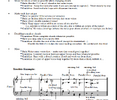
wait how would the appoggiatura transition clealnly? what kind of AP music class are you taking?
THE_V01DL0RD
THE_V01DL0RD
im confused
1747696280816.png
THE_V01DL0RD
THE_V01DL0RD
if its c major, Id imagine it start(lowest to highest) like GCEC and end either wth GBDG or GBDB.Ig I'd prolly resolve it with a CGEC. As for what rules it breaks, Idrktbh.
THE_V01DL0RD
THE_V01DL0RD
honestly don't understand the question
P
pTr
Not a fun class.

First the Cadential 6/4
Bass: G (5th)
Soprano: E (3rd)
Alto: C (I)
Tenor: G (5th)

Fun chord, it's just an inversion of C. But it resolves into the V chord (G-B-D)
P
pTr
Now, appoggiatura is a non-chord tone that is approached by a leap and resolved by step (usually downward) to a chord tone. It typically occurs on the beat, creating a strong dissonance.

But I'm asking for 2 appoggiaturas, this is rare and tricky (and fun): Multiple dissonances must resolve clearly. They must not interfere with the cadential structure. Parallel motion and bad intervals (5ths/8ves) must be avoided.
P
pTr
I would fix this by keeping the alto static or moving stepwise to maintain harmonic stability. Use a dominant pedal note to create stability beneath.


Soprano C (appogg.) → B (5th of V) B
Alto D (3rd of V) D
Tenor A (appogg.) → G (root of V) G
Bass G (dominant pedal) G

I think?
THE_V01DL0RD
THE_V01DL0RD
wouldnt the G and A create dissonance? also I don think you can have parralell octaves or any unison
P
pTr
Correct, a is a major 2nd above the base = dissonance.

An appoggiatura is an accented dissonance that must resolve by step. In common‑practice cadences you want those dissonances.
Appoggiaturas are non‑chord tones on the beat. The A (in tenor) is treated just like a 6–5 or 4–3 suspension: you expect it to clash, so long as it then drops by step into a consonance (G).
P
pTr
You approach A by leap or skip from the previous chord, and then resolve downward to G on the next strong subdivision. Likewise, the soprano’s C (a dissonant 4th above G) falls to B.

As long as there’s no parallel 5ths/8ves and each dissonance resolves cleanly, the “harshness” is the expressive tension you need for cadence.
THE_V01DL0RD
P
pTr
😁
Back
Top