• Welcome to SpeedSolving.com — the world’s largest puzzle community!

    You’re currently browsing as a guest, which means you have limited access to discussions, resources, member profiles, and community features.

    Join 50,000+ cubers and puzzle enthusiasts from around the world to ask questions, share solves, improve faster, and be part of the community.

    Registration is free, fast, and easy — create your account today.

    Already a member? Log in here to hide this message and start participating.

Limits of perception

  • Thread starter Thread starter Deleted member 36445
  • Start date Start date
D

Deleted member 36445

Guest
You are in a strange world. All you see around you makes no sense. You decide to look around until some unknown force makes you see what you can't see.

Food for thought.

 
Reminds me of the 4D Rubik’s cube and various hypersimensional puzzles. You can only see their 3D shadows and have to make sense of it. But you can never truly see them in their natural, full glory...
You Can Not No GIF by DrSquatchSoapCo
 
How is this video related to puzzle solving?
I really don't think it is related to "puzzle solving" but I think it belongs to "puzzle video gallery".

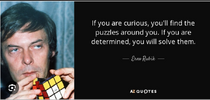
As Professor Rubik's once said:

1747587339698.png

the video is about seeing a problem from another angle.

the discussions on this very thread were about hyperdimensional puzzles, I don't know if you even read them.
 
actually, I have aphantasia so its not possible for me to visualise higher dimensions because I cant even visualise real ones
So do I! I use logic for a lot of things. Also, when I try to make a mental image, the word of what I'm trying to see keeps repeating in my head, but I see nothing. However, ask me to describe a room I was in two years ago at some event and I can describe it almost perfectly. I remember useless facts, but not where I left my hat. Gee, thanks ADHD!
 
Firstly, I would like to say that there might be some trigger words in this post. I do not mean to offend anyone. Also, I'm not saying that anyone is being dishonest about themselves in any way; I'm just being curious and prompting further questions.

How would one know if they have 'disorders' like aphantasia?

Aphantasia is defined as the inability to voluntarily visualise mental images. The word originates from ancient Greek phantasia (φαντασία), which means "appearance/image", and the prefix a- (ἀ-), which means "without". A 2020 study concluded that those who experience aphantasia also experience reduced imagery in other senses, and have less vivid autobiographical memories. Dawes AJ, Keogh R, Andrillon T, Pearson J (June 2020). "A cognitive profile of multi-sensory imagery, memory and dreaming in aphantasia". Scientific Reports. 10 (1): 10022. Bibcode:2020NatSR..1010022D. doi:10.1038/s41598-020-65705-7. PMC 7308278. PMID 32572039. In 2024, a research team led by Jonathan Rhodes from the University of Plymouth assessed the imagery abilities of over 300 athletes finding a small sample of 27 who had aphantasia or low imagery abilities. The researchers developed a training program over six weeks to improve imagery ability, finding that it can be significantly improved for the majority of participants. Rhodes J, May J, Nedza K, Clements L (April 2024). "Imagery training for athletes with low imagery abilities". Journal of Applied Sport Psychology. 36 (5): 831–844. doi:10.1080/10413200.2024.2337019.

I don't think that aphantasia is a traditional 'disorder', but rather something that some individuals struggle with. I know that sounds like word games, but think about someone with Down Syndrome. Caused by an extra 21 chromosome, Down Syndrome is considered a 'disorder'. In most cases, Down Syndrome can't be 'solved' or 'fixed' by a training program. Aphantasia is more like having bad eye-hand coordination. It's something that you can improve with practice and effort. People like @cranberryjuice and @Curunír might say they can't visualise mental images. But 5 months ago, I would have said that I couldn't solve a Rubik's Cube. But then I tried and put effort into getting better. And now, I have solved one in 13.91. This took 2-4 hours a day, putting intentional efforts into it. I think that you could make mental images simply if you wanted to and put the time and effort into the right practice.

- pTr​
 
actually, I have aphantasia so its not possible for me to visualise higher dimensions because I cant even visualise real ones
So do I! I use logic for a lot of things. Also, when I try to make a mental image, the word of what I'm trying to see keeps repeating in my head, but I see nothing. However, ask me to describe a room I was in two years ago at some event and I can describe it almost perfectly. I remember useless facts, but not where I left my hat. Gee, thanks ADHD
Firstly, I would like to say that there might be some trigger words in this post. I do not mean to offend anyone. Also, I'm not saying that anyone is being dishonest about themselves in any way; I'm just being curious and prompting further questions.

How would one know if they have 'disorders' like aphantasia?

Aphantasia is defined as the inability to voluntarily visualise mental images. The word originates from ancient Greek phantasia (φαντασία), which means "appearance/image", and the prefix a- (ἀ-), which means "without". A 2020 study concluded that those who experience aphantasia also experience reduced imagery in other senses, and have less vivid autobiographical memories. Dawes AJ, Keogh R, Andrillon T, Pearson J (June 2020). "A cognitive profile of multi-sensory imagery, memory and dreaming in aphantasia". Scientific Reports. 10 (1): 10022. Bibcode:2020NatSR..1010022D. doi:10.1038/s41598-020-65705-7. PMC 7308278. PMID 32572039. In 2024, a research team led by Jonathan Rhodes from the University of Plymouth assessed the imagery abilities of over 300 athletes finding a small sample of 27 who had aphantasia or low imagery abilities. The researchers developed a training program over six weeks to improve imagery ability, finding that it can be significantly improved for the majority of participants. Rhodes J, May J, Nedza K, Clements L (April 2024). "Imagery training for athletes with low imagery abilities". Journal of Applied Sport Psychology. 36 (5): 831–844. doi:10.1080/10413200.2024.2337019.

I don't think that aphantasia is a traditional 'disorder', but rather something that some individuals struggle with. I know that sounds like word games, but think about someone with Down Syndrome. Caused by an extra 21 chromosome, Down Syndrome is considered a 'disorder'. In most cases, Down Syndrome can't be 'solved' or 'fixed' by a training program. Aphantasia is more like having bad eye-hand coordination. It's something that you can improve with practice and effort. People like @cranberryjuice and @Curunír might say they can't visualise mental images. But 5 months ago, I would have said that I couldn't solve a Rubik's Cube. But then I tried and put effort into getting better. And now, I have solved one in 13.91. This took 2-4 hours a day, putting intentional efforts into it. I think that you could make mental images simply if you wanted to and put the time and effort into the right practice.

- pTr​
Well said. Also, my English teacher would give you an A+ for citations. I'm not saying it's a disorder, and I do believe that it can be improved, I just really struggle with it.
 
1) So do I! I use logic for a lot of things. Also, when I try to make a mental image, the word of what I'm trying to see keeps repeating in my head, but I see nothing. However, ask me to describe a room I was in two years ago at some event and I can describe it almost perfectly. I remember useless facts, but not where I left my hat. Gee, thanks ADHD

2) Well said. Also, my English teacher would give you an A+ for citations. I'm not saying it's a disorder, and I do believe that it can be improved, I just really struggle with it.
1) When I think of my room, I don't necessarily see my room, but I know where everything (mostly) is since I've been in there 10 hours ago. For me, it's more just a bunch of facts that I've stored in short-term memory. Faces and other important things are stored in long-term memory, so when I see them next, I can quickly associate facts about whatever I need. It takes me a while to be able to picture something in my mind. My family's faces, sure, my brother's friends, no.

2) Wikipedia is a great source, no matter what teachers say, for my argumentative essay this year, I proved Wikipedia's usefulness and credibility in the school setting. Well, if you care about it enough, you'll work on it; if not, you won't. It's not up to anyone else but you.
 
This is a really interesting topic.

On the other side o aphantasia is phantasia, or in different wording, we can refer to visual thinking.

This is a really interesting read; maybe can lead to some cool insights in how the mind work differently from person to person, and after all expecting someone to just make their mind work some other way is not a reasonable expectation

👇

 
Last edited by a moderator:
Back
Top